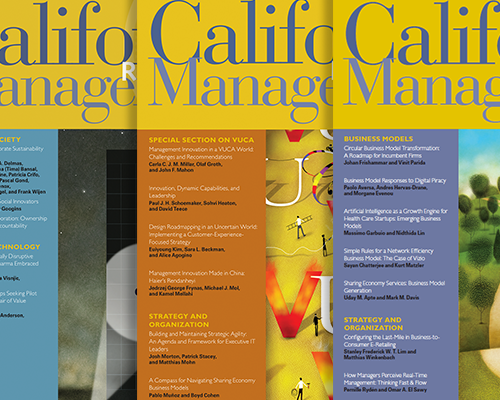
Our winter special issue features contributions on circular cities, highlighting the importance of urban centers in promoting cross-sector coordination and regenerative innovation in food, energy, construction, and waste
New technology is often piloted by companies before it’s fully rolled out. Then again, some companies choose not to pilot, and are successful anyway. We review some pros and cons of piloting, and some key factors to examine before jumping in to a technology pilot.
Today most large companies issue reports that describe their social and environmental efforts. But what seems like a positive step could actually be disguising political action behind the scenes.
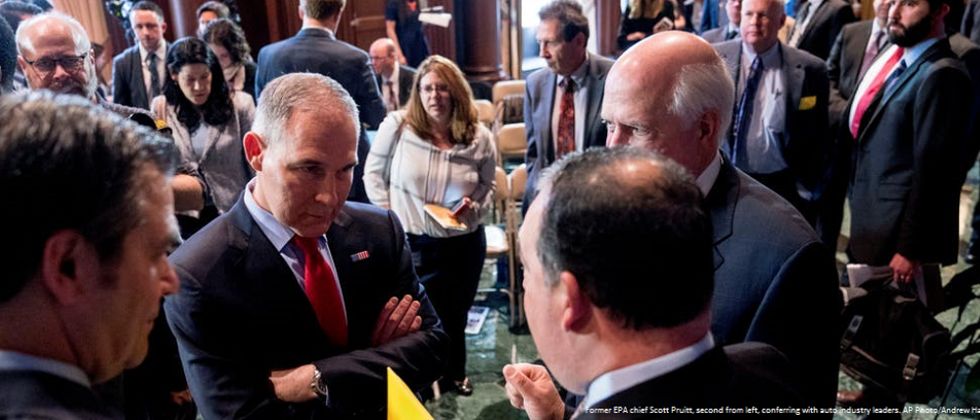
California has one of the most important car markets in the world. The state has long led the way in pushing for less-polluting vehicles, but that may soon change.
When former CEO Jeff Immelt left GE in 2017, the company faced the challenge of adjusting its focus to better compete in volatile, uncertain, complex, and ambiguous (VUCA) conditions.
The pharmaceutical industry faces disruption with the rise of medical marijuana. The way firms responsded to a similar shift with the advent of biotechnology could indicate future trends for Big Pharma.
The American financial industry has been trenchantly male since its inauguration. How will the industry respond to newcomer Ellevest, which touts itself as an investment platform by and for women?
Following its recent implicit bias training, Starbucks has a unique opportunity to engage frontline employees by asking how they would reduce racial bias in their stores. The company could gain more engaged employees and reduce turnover by turning its employees into corporate social innovators.
Artificial Intelligence (AI) is alluring. But in its current incarnation, AI is nothing more than a tool. And like all business tools, they are only effective when the right processes are built around it.
In the Industrial Era, the Ford name was once synonymous with automotive innovation. In a time of driverless cars and electric hybrids, how can Ford integrate new technologies and visions of the future to become a leader of innovation once again?
Corporations can lead the way in finding sustainable solutions to the climate crisis. But they must operate with awareness and urgency. The Alliance for Research on Corporate Sustainability (ARCS) is a partnership among academic institutions created to facilitate research on corporate sustainability.
A recent CMR article analyzes the synergy of logics in Employee Stock Ownership Plans (ESOP) and benefit corporations. ESOPs have long been touted to increase a sense of ownership throughout an organization. So why did United Airlines venture into ESOPs fail?
Sustainable business models come from corporations embracing their Corporate Social Responsibility (CSR) and Corporate Political Responsibility (CPR) – both in letter and spirit. CSR reports from companies is becoming a standard; but are there vital political metrics companies omit in their transparency reports?